
Research retrospective
Hurt So Good: What Stories Taught Us About Health, Pleasure and Permission
A look back at an early SEEQ study revealing how trust, shame, responsibility and self-acceptance shape the relationship between health and pleasure.

Health and pleasure are often treated as competing ideas. Health is responsible. Pleasure is indulgent. Health asks us to follow the rules. Pleasure begins when we give ourselves permission to step outside them.
But people do not experience their lives in categories that cleanly. In March 2019, we brought a group of people together in Richmond for an early community SEEQ session and invited them to share stories about health and pleasure. We wanted to understand how the two ideas lived together in people’s memories, choices and sense of self.
The stories were candid, emotionally complex and deeply connected to other people. They suggested that the most meaningful tension was not simply between a healthy choice and a pleasurable one. It was between obligation and freedom, judgment and acceptance, care for others and permission to care for oneself.
These findings come from our 2019 work, using an earlier version of the SEEQ methodology. We are returning to them because the qualitative patterns and questions remain useful for healthcare, wellness, caregiving and experience design.
The stories resisted easy categories
Three-fourths of the stories explicitly discussed both health and pleasure, often leading with pleasure or its inverse, pain. Even when a story appeared to focus on only one topic, the other was usually present beneath it.
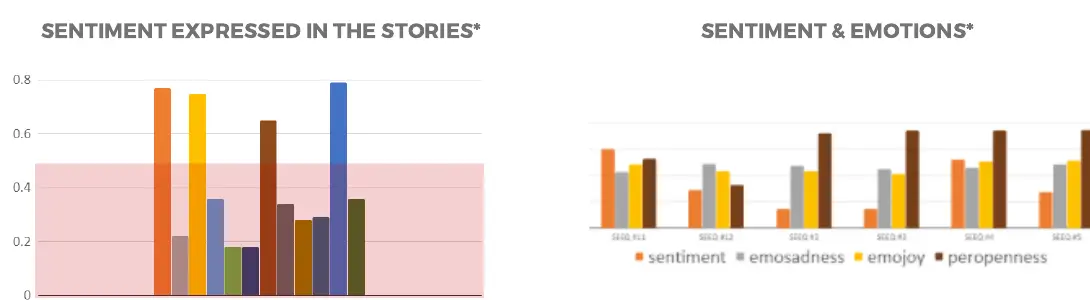
That relationship was not always positive. Most of the stories carried negative sentiment, despite being about concepts we might expect people to welcome. Sadness and joy appeared in nearly equal measure. The stories showed that a pleasurable experience can carry guilt or embarrassment, just as an experience focused on health can include relief, pride or joy.
We had also expected to see strong expressions of hedonism or self-enhancement. Instead, the stories revealed self-transcendence: people were focused on the needs, expectations and wellbeing of others. Sometimes they described what other people needed from them. Sometimes they described what they believed others expected. And sometimes the person imposing the standard was an internalized version of someone else.
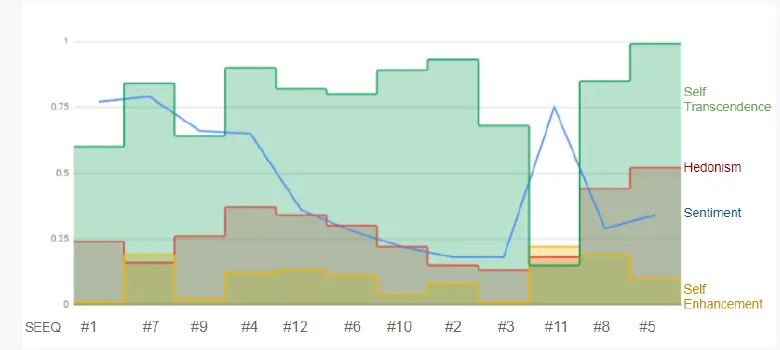
That combination helped explain an important tension. People valued caring for others, yet many struggled to offer themselves the same freedom, permission and acceptance.
Two stories bring the pattern into focus
Two participant stories from the collection were published with permission on our original Storyteller site. We are not republishing them here, and we are preserving both contributors’ anonymity. But their voices help show what the aggregate signals meant in lived experience.
In Mother Tapes, one participant described body shame, a difficult relationship with food and the gradual work of redefining care. A turning point came with a clear realization: When I reached 50 I decided that it was no longer productive for me to hate my body.
The story distinguishes the immediate pleasure of emotional soothing from the harder, longer work of physical and emotional health, then expands pleasure to include reading, travel and exploring one’s community.
In Dad Habits Die Hard, another participant traced the pain of his parents’ separation into his own experience as a father facing divorce. The story held grief, responsibility, fear and love at once. He named the emotional burden directly: This very thing that’s haunted me.
His reflection shows how inherited pain can shape emotional health, relationships and the effort to break a family pattern rather than repeat it.
Neither story reduces neatly to health or pleasure. Both show how memory, family roles, shame, love and self-acceptance travel together. The individual stories give texture to the patterns the larger collection helped us see.
Health felt responsible. Pleasure felt like permission.
Health often appeared as an obligation or an aspirational standard. People described what they should do, how they should look and the responsible choices they believed they should make. Falling short could create embarrassment or the feeling that they had failed to become who they were supposed to be.
Pleasure often appeared as a break from those expectations. The stories included travel, laughter, nature, running, reading, food, drinking, expressions of love and sex. Some pleasures were routine. Others were singular moments of release that changed a person’s perspective long after the moment passed.
Nature was especially vivid in several stories. People could recall how being in nature felt in their bodies and why that feeling mattered. Even the realization that they did not have to be perfect, or perfectly healthy, could become pleasurable.
For some participants, pleasure arrived through risk, rule-breaking or finally doing something that had been pent up. For others, it came through acceptance: recognizing a present physical or emotional reality, understanding how they had arrived there and releasing themselves from the expectation that they must be somewhere else first.
The deeper issue was rarely a simple choice between healthy and pleasurable behavior. People were trying to create a mix that felt emotionally sustainable.
Care for others sometimes became denial of self
The stories often described the pressure to care for family, meet workplace expectations or continue doing what other people needed. Women frequently connected difficult health experiences to their roles as mothers and wives. Others described a similar pressure inside large organizations, where doing what the company required could interfere with caring for themselves.
Self-transcendence can express generosity, connection and shared purpose. In these stories, it sometimes felt closer to self-denial. Service to others did not always feel good because people had excluded themselves from the circle of care.
This raised a question that still deserves attention: does caring for oneself require a small but necessary act of self-centeredness? Harmony may depend on enough liberty and self-expression to define a mix that is sustainable. Caring for others becomes harder when a person is never permitted to include their own emotional and physical needs.
We build frames for what feels acceptable
During the session, we began using the idea of a frame to describe how people define an acceptable balance of health and pleasure. A frame can be a commitment to health that makes room for pleasure, or a supportive environment that makes healthy behavior feel possible. What fits inside the frame feels permitted. What sits outside it may feel irresponsible, shameful or unsafe.
Those frames are shaped by family, culture, identity, past experiences and the expectations of others. Some people live comfortably inside a frame that supports them. Others feel trapped inside one that no longer fits. Still others are trying to create a frame of their own.
In more than half of the stories, the analysis found a recurring pattern involving love, practicality, self-expression and stability. We wondered whether those qualities might function like the rails of a frame: providing enough structure for people to pursue both wellbeing and pleasure without experiencing them as opposites.
Trust can expand the frame. Shame can shrink it.
Trust changes what people are willing to include in a conversation. A person who trusts a health provider not to judge past behavior may be more willing to name it, explore its consequences or seek care. A person anticipating shame may leave the experience outside the frame entirely and avoid the professional opinion that could help.
This is one reason a technically correct recommendation may still fail. Information does not arrive in an emotional vacuum. People evaluate it through memories, relationships, identity and what they believe will happen if they tell the truth.
Time was another important part of the frame. Health and pleasure were each mentioned an average of 1.5 times per story; time appeared 2.2 times. Sometimes that meant time of day or the pressure of a schedule. More often it meant a time of life. What feels healthy, pleasurable or permissible changes as people age, take on new roles and reinterpret earlier experiences.
An early signal of what SEEQ would become
The study also helped us begin exploring what we called emotional bundles: the idea that emotions, needs, values and personality signals work together rather than appearing in isolation.
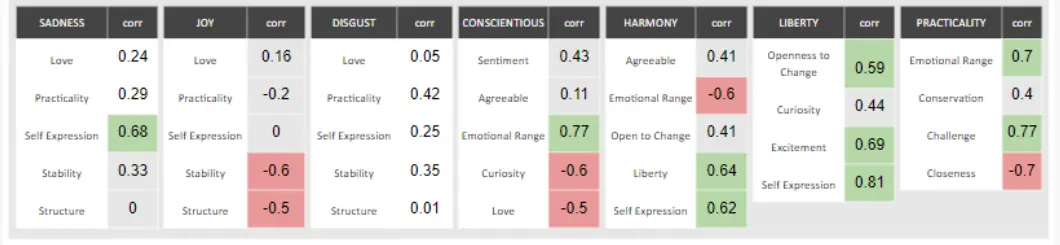
Our early analysis suggested that a need such as liberty could sit alongside a constellation of other traits, needs and values. Joy might also involve stability, structure and self-expression. Sadness might carry a related need to express what has not yet been said. Labeling someone as happy or sad is too simple to explain the experience, and trying to produce a stand-alone emotion is unlikely to address what sits beneath it.
Those questions helped shape an enduring premise of SEEQ: emotional signals become more useful when we understand how they relate to one another and when we return to the stories for context.
Our technology, models and methodology have developed considerably since 2019. The core lesson has remained. We start with questions, listen to what people share, examine the signals, return to the stories and use each pass to ask better questions.
What these stories invited organizations to consider
The original report did not prescribe a single answer. It asked organizations to think differently about the experiences they were designing.
For health-oriented organizations, the question was: how might you design more pleasure into an experience grounded in wellbeing? The answer might appear in the tone of a conversation, the sensory feel of a product, a culturally relevant choice or a care experience that creates dignity rather than sterility.
For pleasure-oriented organizations, the question moved in the other direction: how might you design more health, clarity or structure into the experience without stripping away what makes it pleasurable?
For any organization seeking behavior change, the work begins by understanding the current frame. What feels acceptable now? What would a better future frame make possible? Which experiences, relationships and behaviors could help people move from one to the other?
Those are experience questions, not just communication questions. They call for leaders to understand how trust, shame, responsibility, identity and permission shape the choices people can imagine making.
Why this still matters
When people are making healthcare decisions, moving through recovery, pursuing wellness or adapting to changes that come with aging, they are rarely making one isolated choice. They are moving through a series of decisions, handoffs and moments of uncertainty while carrying emotional, practical and financial pressure.
Organizations usually have data showing service use, participation, completion rates and outcomes. Stories help explain why the experience unfolded the way it did: what increased confidence, what weakened trust, where expectations became unclear and why a next step began to feel too difficult.
The stories from 2019 remind us that care is both fundamental and emotional. More human experiences become possible when organizations understand the frames people carry, reduce unnecessary judgment, support personalized and culturally relevant choices, and treat emotional wellbeing as part of the experience rather than an add-on.
From the SEEQ archive
The original March 2019 report includes the full study context, analysis and limitations.
Read the original 2019 report: Hurt So Good: Exploring Health and Pleasure Driven Experiences
Talk with us about applying human experience insight to healthcare, wellness or caregiving.